Albany Graphite Project · TSXV: ZEN · OTCQX: ZTEKF
Albany.
The purity reactors need. From ground allies can count on.
Ultra-high-purity graphite with potential for nuclear, defence and aerospace applications in allied jurisdictions.
Maximum measured carbon purity
99.99985wt.%
5N+ · bench scale · disclosed September 14, 2026; average of 99.9995 wt.% carbon average purity over three samples
Preliminary economic assessment · Headline economics
See Zentek's press release dated August 10, 2026. The NI 43-101 technical report supporting the PEA, prepared by Micon International Limited with an effective date of June 30, 2026, was filed on SEDAR+ on September 24, 2026. All PEA figures are in United States dollars. Currency conversions use CD$1.33 per US$1.00.
The PEA is preliminary in nature. It includes inferred mineral resources that are considered too speculative geologically to have the economic considerations applied to them that would enable them to be categorized as mineral reserves, and there is no certainty that the PEA will be realized. Mineral resources that are not mineral reserves do not have demonstrated economic viability. Readers are cautioned not to assume that all or any part of the Indicated or Inferred Mineral Resources will ever be converted into Mineral Reserves or that the PEA represents, or will result in, an economically viable mining operation.
Inside the economics01 · The deposit
A different kind of graphite deposit.
Most graphite is flake: organic carbon in sedimentary rock, converted by regional metamorphism. Albany formed another way. CO2-rich fluids from a degassing magma deposited graphite directly into an igneous host, filling two breccia pipes.
The technical report describes Albany as a globally unique example of an epigenetic graphite deposit in which a large volume of highly crystalline, fluid-deposited graphite occurs within an igneous host.
Mineral Resource Estimate effective June 30, 2026. Open pit resources are constrained by a pit shell above a 1.48% Cg cut-off grade. Mineral resources that are not mineral reserves do not have demonstrated economic viability.
The PEA is preliminary in nature. It includes inferred mineral resources that are considered too speculative geologically to have the economic considerations applied to them that would enable them to be categorized as mineral reserves, and there is no certainty that the PEA will be realized. Mineral resources that are not mineral reserves do not have demonstrated economic viability. Readers are cautioned not to assume that all or any part of the Indicated or Inferred Mineral Resources will ever be converted into Mineral Reserves or that the PEA represents, or will result in, an economically viable mining operation.
02 · Purification
2,800°C
Thermally purified under nitrogen in a fluidized bed reactor.
No hydrofluoric acid. No caustic bake. No halogen gases.
Battery and specialty grades are typically purified chemically, with caustic soda and hydrofluoric acid. Nuclear routes add a halogen treatment to remove boron. Albany's bench-scale material reached nuclear specification without it.
Flotation uses three reagents and no pH modifiers. The nuclear product is pelletized without binders or additives.
Results obtained at bench scale at an independent laboratory in the United States. They have not been demonstrated at continuous commercial scale and have not completed customer qualification.
Next steps
Talk to us about Albany.
For investors, analysts and industry partners. The report authors are available through investor relations.
03 · How it compares
Above battery grade. Made differently.
Where it is made
Supplied today
Most is purified in China. In nuclear, the qualified material is synthetic, from a few producers in Germany, Japan and the United States.
Albany
One deposit in Northern Ontario.
How it is purified
Supplied today
Three routes, two using halogens. Battery and specialty grades are purified chemically, with caustic soda and hydrofluoric acid. Nuclear-grade natural graphite is thermally purified, then halogen-treated for boron.
Albany
Thermally. Approximately 2,800°C under nitrogen. No acid, no caustic bake, no halogens.
How pure it gets
Supplied today
Commercial battery-grade natural graphite is typically purified to approximately 99.95 wt.% carbon.
Albany
99.99985 wt.% carbon at bench scale, 5N+.
Hydrofluoric acid is highly hazardous and requires specialised handling, containment and waste treatment. Sources: Micon PEA Section 19.4; University of Manchester, Graphite as a core material for Generation IV nuclear reactors; published literature on thermal and halogen purification of natural graphite; NIOSH. Albany results are at bench scale and have not been demonstrated at continuous commercial scale or completed customer qualification.
04 · Inside the PEA
What the study actually models.
Unlike many graphite development studies that focus on concentrate production, this PEA models finished graphite products. The PEA takes Albany material from the deposit through flotation to thermal purification, and prices three specialty graphite grades at the end of it.
The flowsheet
Deposit to 5N.
- 01Open pit2,703 t/d average · two breccia pipes
- 02ConcentratorCrushing, grinding, flotation · 86% recovery
- 03Concentrate87% Cg · trucked to an off-site purification facility
- 04Thermal purificationHalogen-free fluidized bed reactor at 2,800°C · 96.4% recovery
- 05Three product grades4N, 4N+, 5N
The purification plant is designed as five parallel modules of 7,500 t/a each, built in stages to match product sales.
The PEA is preliminary in nature. It includes inferred mineral resources that are considered too speculative geologically to have the economic considerations applied to them that would enable them to be categorized as mineral reserves, and there is no certainty that the PEA will be realized. Mineral resources that are not mineral reserves do not have demonstrated economic viability. Readers are cautioned not to assume that all or any part of the Indicated or Inferred Mineral Resources will ever be converted into Mineral Reserves or that the PEA represents, or will result in, an economically viable mining operation.
05 · The economics
Small volume. Wide margin.
At 30,000 tonnes a year, Albany is smaller than many large graphite projects. It is margin rather than scale that drives the economics.
See Zentek's press release dated August 10, 2026. The NI 43-101 technical report supporting the PEA, prepared by Micon International Limited with an effective date of June 30, 2026, was filed on SEDAR+ on September 24, 2026. All PEA figures are in United States dollars. Currency conversions use CD$1.33 per US$1.00.
The PEA is preliminary in nature. It includes inferred mineral resources that are considered too speculative geologically to have the economic considerations applied to them that would enable them to be categorized as mineral reserves, and there is no certainty that the PEA will be realized. Mineral resources that are not mineral reserves do not have demonstrated economic viability. Readers are cautioned not to assume that all or any part of the Indicated or Inferred Mineral Resources will ever be converted into Mineral Reserves or that the PEA represents, or will result in, an economically viable mining operation.
06 · Products and pricing
Ten percent of the tonnes. Twenty-two percent of the revenue.
Albany’s product mix is weighted by volume toward 4N material, and by value toward 5N. The 5N grade is the one aimed at nuclear, defence and aerospace applications.
Tonnes
Revenue
| Grade | Annual production | Share of output | Price (US$/t) |
|---|---|---|---|
| 4N | 24,240 t | 80.8% | 20,541 |
| 4N+ | 2,640 t | 8.8% | 19,300 |
| 5N | 3,120 t | 10.4% | 50,000 |
Prices are referenced to published nuclear-grade graphite pricing by product type and production region. No country-of-origin premium was applied. Prices are held constant in real terms over the project life. The assumed prices are contingent upon successful commercial production, product qualification and customer acceptance, none of which has yet been demonstrated. Revenue share derived from PEA production and prices, Table 19.2.
The PEA is preliminary in nature. It includes inferred mineral resources that are considered too speculative geologically to have the economic considerations applied to them that would enable them to be categorized as mineral reserves, and there is no certainty that the PEA will be realized. Mineral resources that are not mineral reserves do not have demonstrated economic viability. Readers are cautioned not to assume that all or any part of the Indicated or Inferred Mineral Resources will ever be converted into Mineral Reserves or that the PEA represents, or will result in, an economically viable mining operation.
07 · The two graphite markets
One name. Two industries.
Battery graphite is a benchmarked commodity with published monthly assessments. The specialty market is specification-gated, contract-priced, and an order of magnitude above it. Albany's PEA is built entirely in the second.
Public reference ranges, US$/t, log scale, from Fastmarkets, Argus, Benchmark Mineral Intelligence, IAEA and OECD-NEA literature, and published DOE and NNSA contract awards. Reference values may reflect processed materials or engineered components rather than bulk feedstock, and actual transaction pricing is specification dependent. These are not Zentek pricing assumptions. Albany prices as modelled in the PEA, Table 19.2.
The PEA is preliminary in nature. It includes inferred mineral resources that are considered too speculative geologically to have the economic considerations applied to them that would enable them to be categorized as mineral reserves, and there is no certainty that the PEA will be realized. Mineral resources that are not mineral reserves do not have demonstrated economic viability. Readers are cautioned not to assume that all or any part of the Indicated or Inferred Mineral Resources will ever be converted into Mineral Reserves or that the PEA represents, or will result in, an economically viable mining operation.
08 · Assumptions
Built on conservative assumptions.
Pit design
The pit was designed below the base price.
The selected pit shell was generated at US$14,378/t, about 61% of the base case price, while capturing more than 95% of the modelled value.
Output
Output is sized to the market.
Concentrate production is capped at 34,500 t/a based on the market assumptions used in the PEA. The cut-off grade was set at 1.48% Cg against a marginal grade of 0.30% Cg. The deposit remains open at depth.
Downside
The downside case stays positive.
At 75% of the base case price, after-tax NPV is approximately US$1.98 billion and after-tax IRR is approximately 17%.
Price sensitivity · ±25%
Product price has a greater impact on project economics than capital or operating costs. Costs carry a 25% contingency across every category.
The PEA is preliminary in nature and there is no certainty that it will be realized. See full cautionary statement above.
09 · Why now
Reactors are buying graphite now, in size.
That demand is specification-driven, which is why the deposit origin matters. Natural graphite supply sits largely outside allied jurisdictions. Nuclear supply is allied, but concentrated in a few producers already expanding against reactor demand.
10 · Location and partnership
The infrastructure is already there.
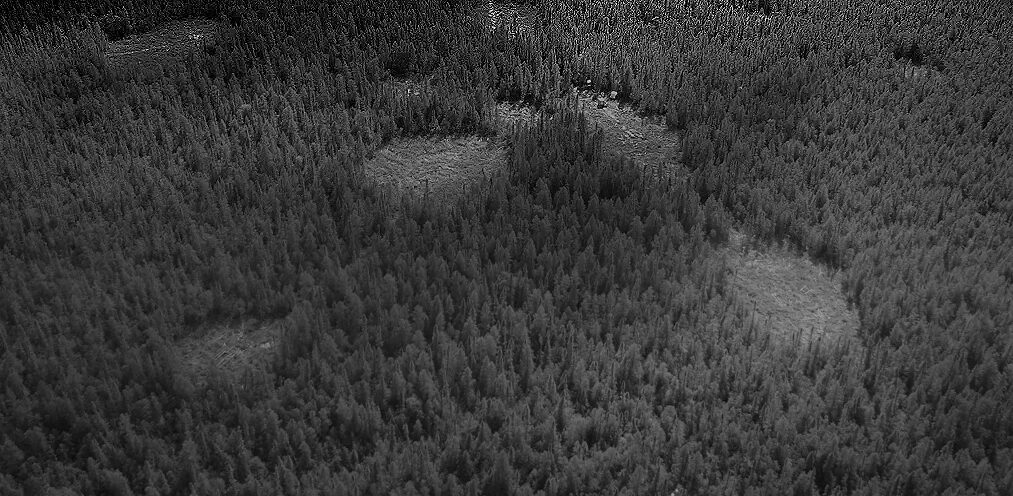
Within 30 km of the Trans-Canada Highway, with existing road, rail, power transmission and natural gas infrastructure in the area. The purification facility location will be selected during later stages of project development.
The project is located in the traditional territory of Constance Lake First Nation and is supported by an Implementation Agreement.
Preliminary estimates, as announced August 10, 2026.
11 · Path forward
From PEA to PFS.
A mining project advances through a sequence of studies. Each one narrows the uncertainty of the one before it, with more drilling, testwork and engineering. Albany has completed the first.
Complete
PEA
Could this project work?
A preliminary economic assessment. An early look at mining, processing and economics, which may include inferred resources.
Recommended next
PFS + FEED
Which design should it be?
Compares options and selects one. Resources can begin converting to reserves. Front-end engineering design (FEED) is recommended alongside it.
Then
Feasibility Study
Is it ready to finance?
Detailed engineering of the chosen design, to the level lenders and partners use for financing decisions.
Then
Final Investment Decision
Build?
The board decision to construct, taken once permits, financing and offtake are in place.
What the next phase addresses
From bench scale to qualified product.
Micon’s Qualified Persons recommend advancing the project to the pre-feasibility stage. The recommended work program is budgeted at approximately US$10.4 million and covers geological studies, geotechnical and hydrogeological investigation, metallurgical testwork, PFS engineering, environmental baseline work, and purification plant design.
The report identifies scale-up of the thermal purification process from bench testing to continuous commercial operation, and customer qualification of the products, as the key items for the next phase.
The PEA was prepared by Micon International Limited, with infrastructure and tailings sections prepared by Halyard Inc. The Qualified Persons are independent of Zentek and Albany Graphite Corp. as defined under NI 43-101.
The scientific and technical information in this document has been reviewed and approved by Peter Wood, P.Eng., P.Geo., Vice President Development of Albany Graphite Corp., and a Qualified Person.
- 01
Purification scale-up
Moving thermal purification from bench testing to continuous operation, and confirming purity and recovery at that scale.
- 02
Customer qualification
Nuclear, defence and aerospace buyers test and approve material against their own specifications before purchase.
- 03
Deposit and site studies
Further geological, geotechnical and hydrogeological work to support mine design.
- 04
Environmental baseline
Establishing existing conditions at the site, the foundation for permitting.
- 05
Purification facility
Plant design and selection of the facility location.
12 · Investor Q&A
Q&A
Does the planned 5N production outstrip the market it's meant to serve?+
The PEA's market study estimates the 5N graphite segment growing to approximately 5,800 tonnes per year by 2035. Albany's planned 5N production is approximately 3,120 tonnes per year. The Project is also capable of producing higher-purity material for specialized applications and is expected to pursue a staged market-entry strategy beginning with aerospace and defence markets. No customer qualification has occurred yet.
How achievable is the US$23,485 per tonne price with no signed contracts?+
The US$23,485/t price assumption comes from the independent market study supporting the PEA and reflects projected pricing for qualified 5N graphite products. Zentek has no signed offtake agreements or contracted prices at this stage. Product qualification and customer engagement are key objectives of the next phase of development.
Where would the purification facility be located?+
A final site has not yet been selected. Site evaluation work will continue during the PFS and will consider factors such as infrastructure, logistics, utilities, permitting requirements and proximity to customers.
How reliable are the capital and closure cost estimates?+
As a preliminary economic assessment, cost estimates carry a higher degree of uncertainty than later-stage engineering studies. The PEA uses the standard ±50% accuracy range typically associated with this level of study. Cost estimates are expected to be further refined during the PFS.
What does “bench scale” mean for the purity results?+
The reported purity results were achieved through bench-scale testing and have not yet been demonstrated at commercial scale. While the results are encouraging, additional pilot-scale and engineering work will be required to confirm performance, recoveries and costs at larger scale.
How will Zentek fund the capital program?+
No financing plan has been announced. Potential funding sources could include strategic partners, debt, equity, government support programs, customer partnerships or a combination of these alternatives. Financing options will be evaluated as the Project advances.
What's the permitting timeline?+
No permitting application has yet been filed. Environmental baseline work and project definition will continue as development progresses. Ontario's One Project, One Process framework is expected to apply, although permitting requirements will become clearer as engineering advances.
What comes after the PEA?+
Micon has recommended advancing the Project to a Pre-Feasibility Study (PFS). A PFS would provide more detailed engineering, metallurgical, environmental and economic analysis, helping to further reduce technical and cost uncertainty.
What's Zentek's relationship with CLFN?+
Zentek and Constance Lake First Nation (CLFN) have maintained a formal relationship since 2011, with agreements updated in 2018 and 2021. The relationship provides a framework for ongoing engagement, governance and shared economic expectations. Zentek intends to work collaboratively with CLFN on employment, training and business opportunities as the Project advances.
What economic benefits could this bring to the region and province?+
The Project has the potential to create employment opportunities during both construction and operations while generating economic activity through procurement, services and infrastructure spending. Zentek disclosed preliminary job-creation estimates in its August 10, 2026, news release (workforce of approximately 1,050 personnel during construction and approximately 230 personnel during operations). The magnitude of regional economic benefits will become clearer as engineering and permitting studies advance.
Documents
Investors, analysts and partners
Questions on the technical work.
The report authors are available to investors and analysts through investor relations.
Cautionary statement
The PEA is preliminary in nature. It includes inferred mineral resources that are considered too speculative geologically to have the economic considerations applied to them that would enable them to be categorized as mineral reserves, and there is no certainty that the PEA will be realized. Mineral resources that are not mineral reserves do not have demonstrated economic viability. Readers are cautioned not to assume that all or any part of the Indicated or Inferred Mineral Resources will ever be converted into Mineral Reserves or that the PEA represents, or will result in, an economically viable mining operation.
The scientific and technical information in this document has been reviewed and approved by Peter Wood, P.Eng., P.Geo., Vice President Development of Albany Graphite Corp., and a Qualified Person.